
Andean Condor photo
Chile

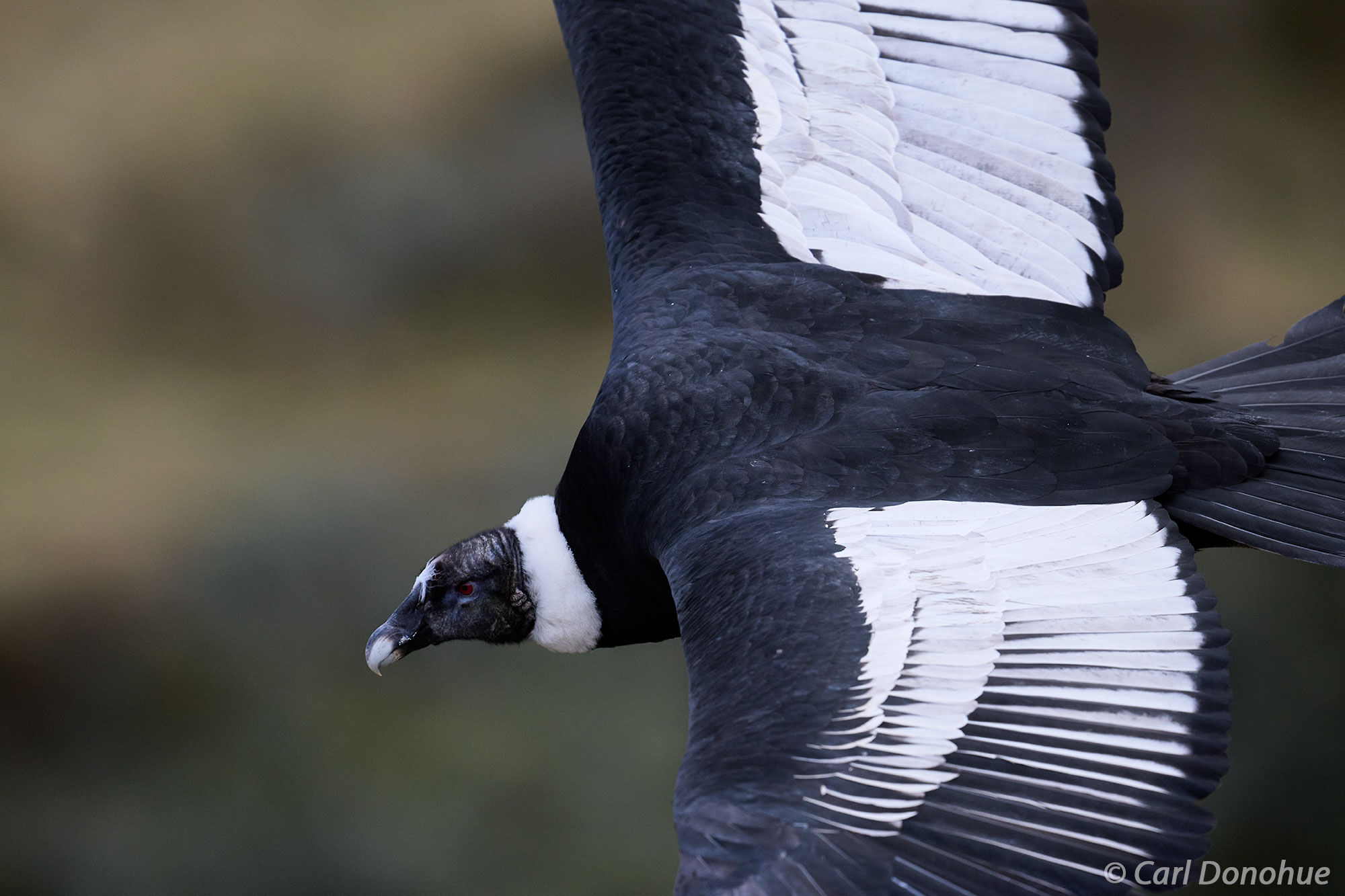

The Andean condor (Vultur gryphus) is one of the largest flying birds in the world, with an impressive wingspan that can exceed 10 feet (3 meters). Found throughout the Andes mountains and across parts of Patagonia, these majestic birds are well-adapted for soaring over open landscapes, riding thermal air currents with minimal effort. In this photo, the condor glides effortlessly over the windswept tundra, a silhouette of power and grace against the dramatic Patagonian sky.
Unlike most raptors, Andean condors are scavengers, relying on their keen eyesight to locate carcasses from high in the sky. They play an essential ecological role as nature’s clean-up crew, helping to prevent the spread of disease by consuming dead animals. These birds are known for their strong social hierarchies, with dominant males typically feeding first at a carcass. Males are distinguished by their fleshy combs and larger size, while both sexes sport the characteristic white collar of feathers at the base of their necks.
Despite their iconic status, Andean condors face threats from habitat loss, poisoning, and low reproductive rates — they typically raise just one chick every two years. Conservation efforts across South America, including in Chile and Argentina, are underway to monitor and protect wild populations. With lifespans that can reach up to 70 years in captivity, these birds are not only symbols of strength and endurance but also a reminder of the importance of preserving the ecosystems they soar above.
Scientific name is Vulture gryphus. Photo © copyright by Carl Donohue.
#25-patagonia-andean-condor-photos-8699