
Solitary Lesser Rhea Chile
Alaska

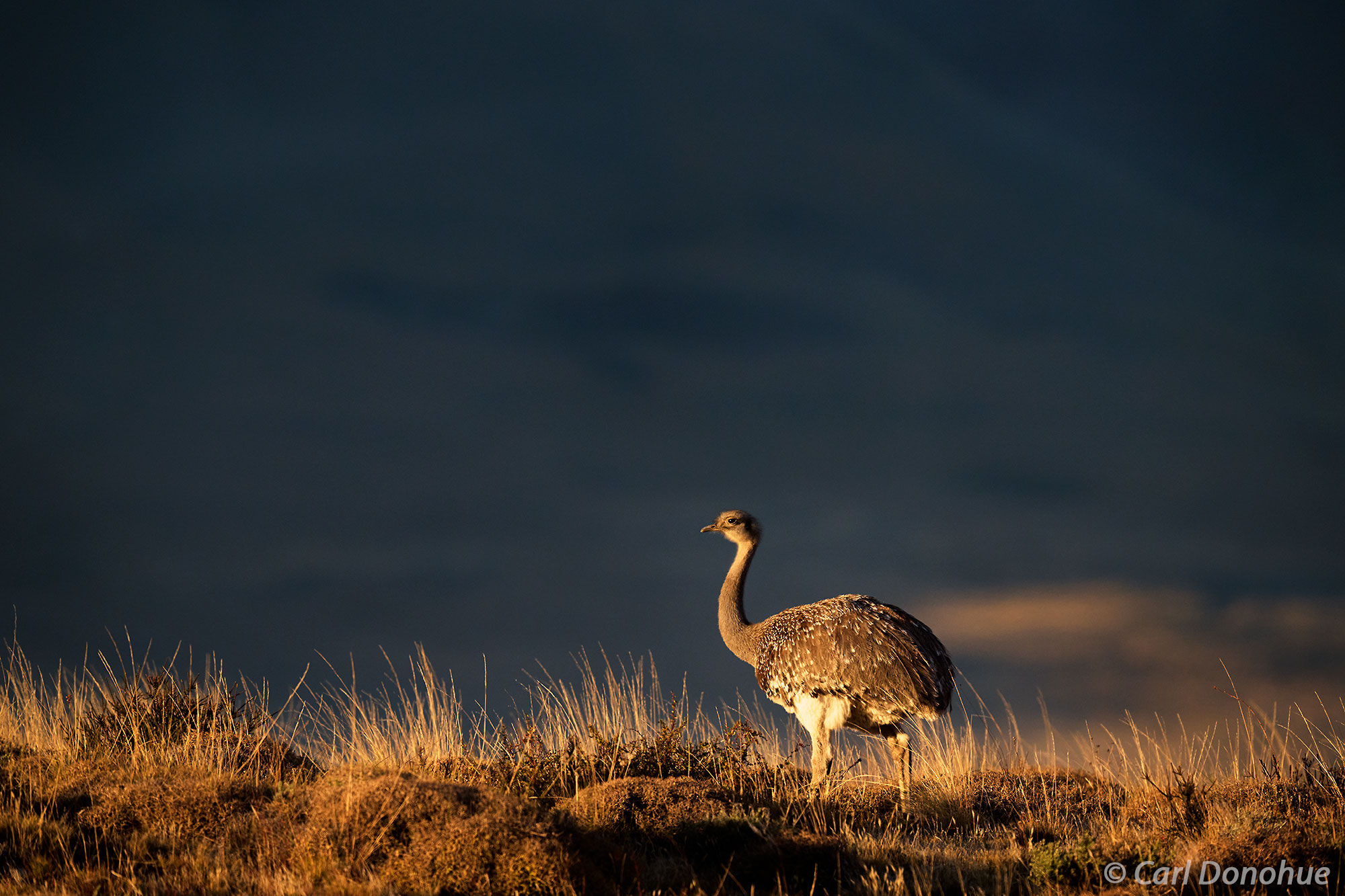

A solitary Rhea walking through scrubland of Patagonia’s Torres del Paine region.
The Lesser Rhea (Rhea pennata), also known as Darwin’s Rhea, is a large flightless bird native to the open grasslands and arid steppe of Patagonia in southern South America. As a ratite, it is related to ostriches and emus but distinguished by its smaller size and unique adaptations to the harsh, windswept regions of Chile and Argentina. Unlike its larger relatives, the Lesser Rhea is built for agility and speed, using its strong legs to escape predators across rugged terrain.
This photo of a Lesser Rhea in Patagonia highlights the bird’s distinctive features—soft, earth-toned plumage, a compact body, and a long neck ideal for scanning the landscape. Often referred to as the "South American ostrich," the species is most commonly spotted grazing in open meadows or moving through scrubby grasslands. Despite past threats to its population, the species is currently listed as of least concern, thanks to regional conservation efforts.
Lesser Rheas play a vital role in the Patagonian ecosystem by aiding in seed dispersal and serving as prey for native predators such as pumas. Their presence in the wild, especially when captured in images like this, provides a powerful visual link to Patagonia’s rich biodiversity and untouched wilderness. Perfect for stock photo users seeking authentic wildlife imagery from South America.
Scientific name is Rhea pennata. Photo © copyright by Carl Donohue.
#25-patagonia-rhea-photos-9093