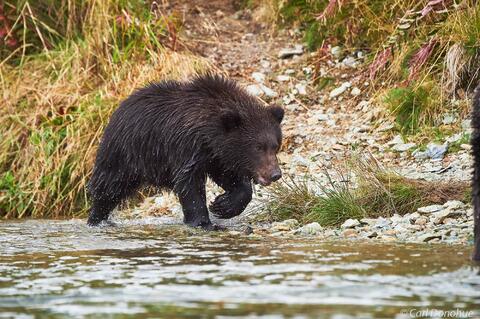
Bear Cub Photos from Alaska
This gallery features photographs of grizzly bear cubs and polar bear cubs from two of Alaska's most important bear habitats: Katmai National Park and the Arctic National Wildlife Refuge. These are wild bears in wild places, photographed on foot over years of fieldwork in some of the most remote country in North America.
Bear cubs are among the most compelling wildlife subjects I photograph. They are unpredictable, expressive, and constantly in motion. A grizzly cub wrestling with its sibling on a riverbank one moment will be nursing the next, then sprinting after its mother across a sedge flat thirty seconds later. Polar bear cubs are the same way. They play hard, stay close to their mothers, and react to everything around them with a mix of caution and curiosity that makes every encounter different from the last.
Grizzly Bear Cubs in Katmai National Park
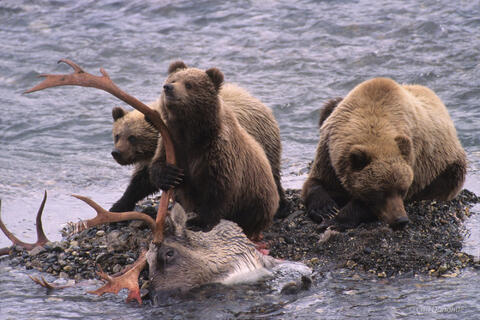
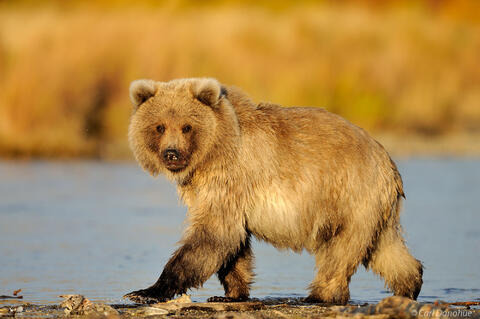
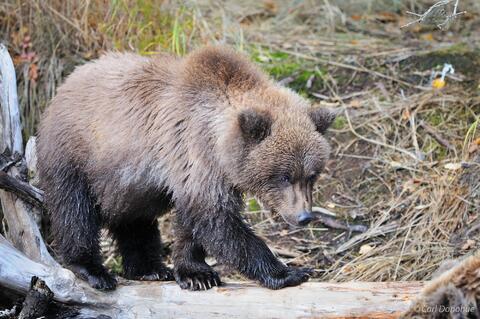
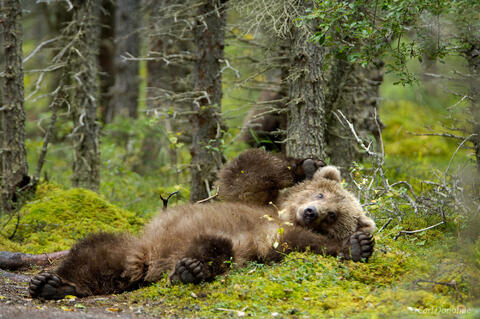
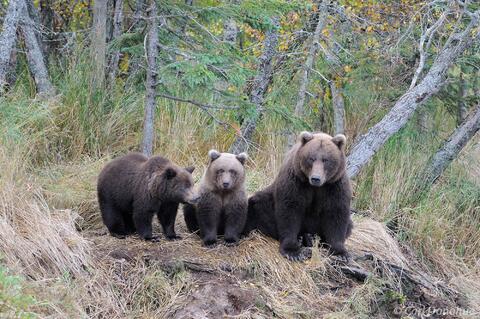
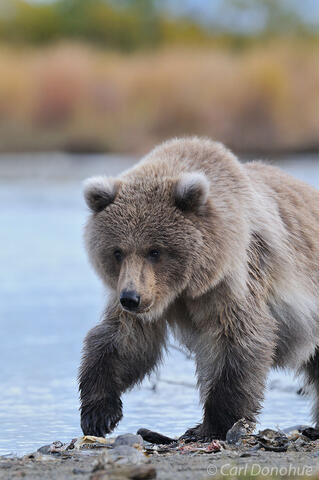
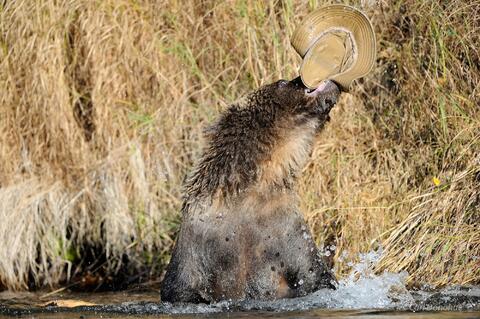
Most of the grizzly bear cub photos in this gallery come from Katmai National Park and Preserve on the Alaska Peninsula. Katmai is home to one of the densest concentrations of brown bears in the world, and the salmon runs that draw them to rivers like the Brooks River each summer create some of the best opportunities anywhere to observe and photograph bear families at close range.
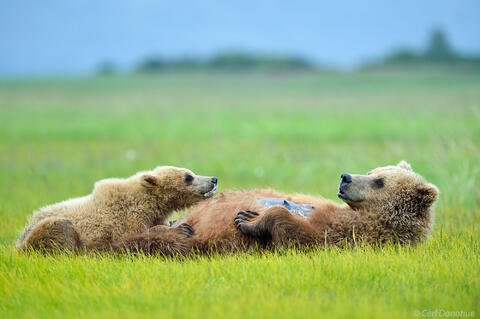
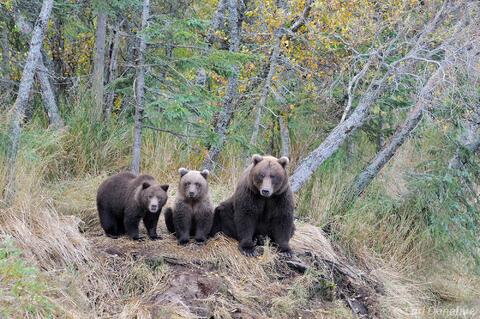
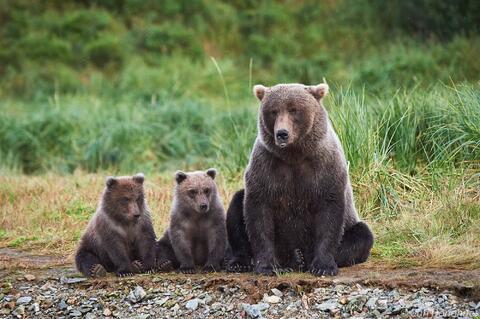
Grizzly bear cubs in Katmai are born in winter dens, usually in January or February, and emerge with their mothers in spring weighing only a few pounds. By the time the salmon start running in July, the cubs are active, mobile, and learning to navigate a landscape full of adult bears, fast water, and unfamiliar food sources. The mothers do the heavy lifting during this period, fishing while their cubs watch from the bank, nursing between meals, and positioning themselves to avoid confrontations with larger males who can be a threat to small cubs.
I have spent many seasons photographing grizzly bear families in Katmai, and the thing that stands out most is how different each mother's approach is. Some sows are aggressive defenders who charge at any bear that comes within fifty yards. Others are calm and tolerant, fishing shoulder to shoulder with other adults while their cubs play nearby. That variation in temperament produces very different photographs, and it is one of the reasons I keep going back. No two bear families behave the same way, and no two seasons unfold the same way either.
Polar Bear Cubs on the Arctic Coast
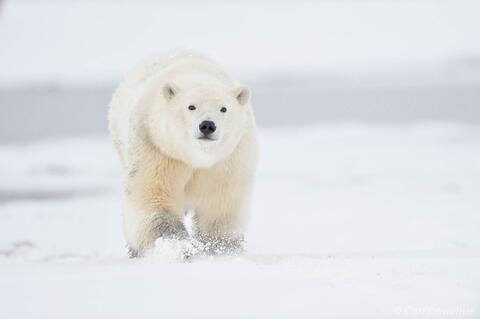
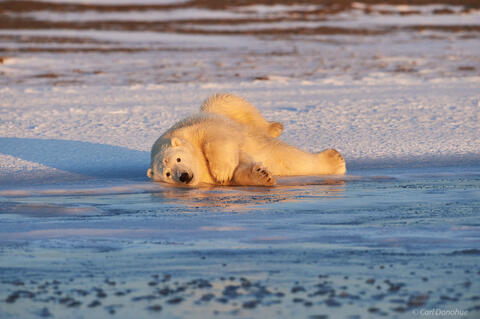
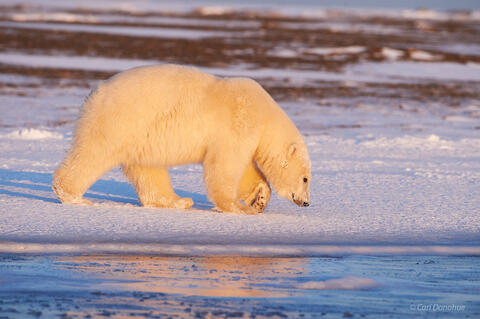
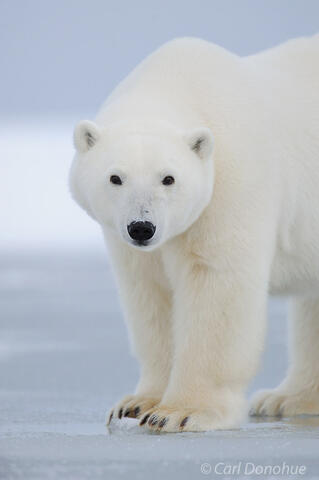
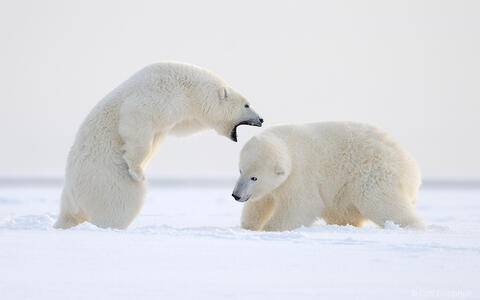
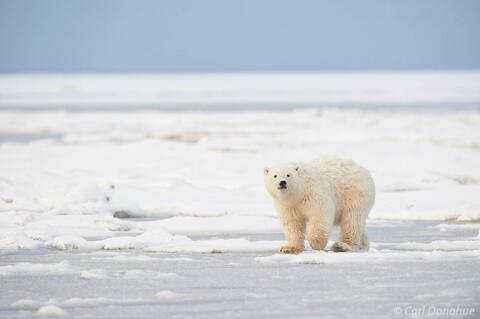
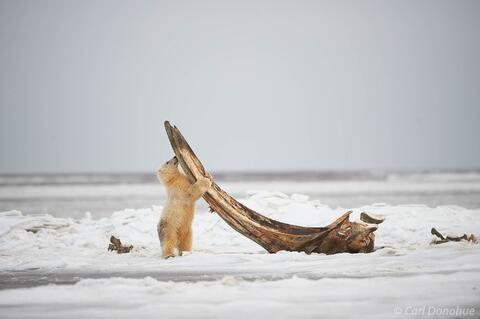
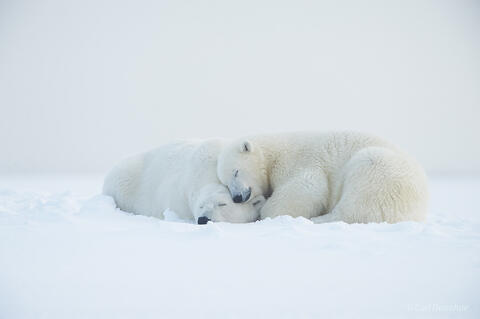
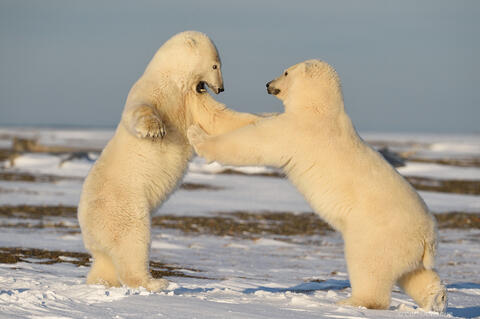
The polar bear cub photographs in this collection come from the Arctic National Wildlife Refuge, where I photograph polar bear families along the Beaufort Sea coast each fall. ANWR is one of the most important polar bear denning areas in Alaska, and the coastal plain is where mothers and cubs emerge in spring before heading out onto the sea ice.
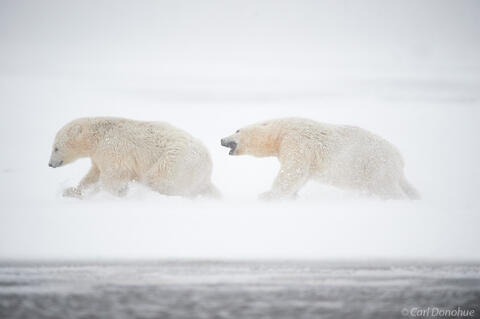
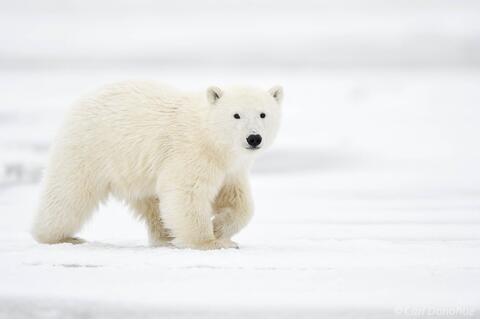
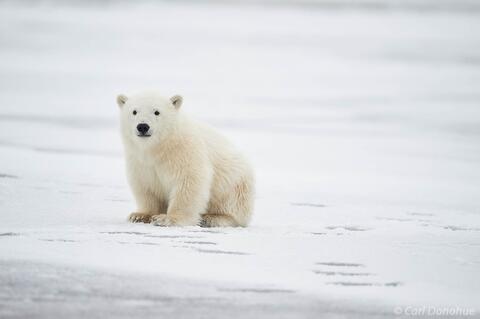
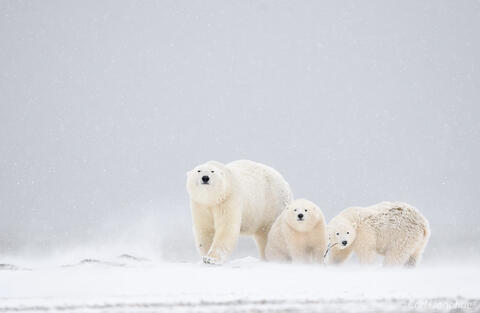
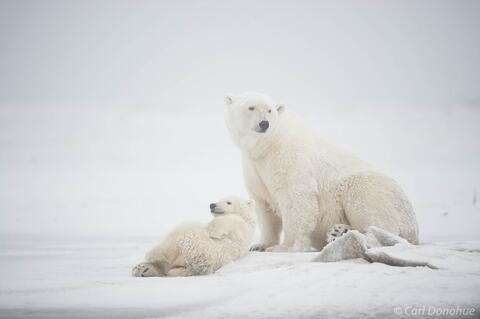
By October, when I am typically on the coast, polar bear cubs born the previous winter are eight or nine months old and still entirely dependent on their mothers. They travel as a tight family unit, often with the cubs pressed close to the sow's legs as they move across the snow. In heavy weather, the family dynamic becomes especially visible. I have photographed polar bear mothers and cubs walking through full blizzards on the ANWR coast, and the way the cubs tuck in against their mother's body for warmth and protection tells you everything about that relationship.
Polar bear cubs are smaller, slower, and more vulnerable than grizzly cubs of the same age. They face different threats too. The open Arctic coastline offers no cover, adult males are a constant danger, and the weather on the Beaufort Sea coast can shift from calm to brutal in minutes. Photographing polar bear families in these conditions takes patience and a willingness to work in weather that most people would rather avoid. But the images that come out of those difficult moments carry a weight that fair weather photos cannot match.
Bear Cub Photography
Photographing bear cubs requires a different approach than photographing adult bears. Adults are generally predictable. You learn their patterns, where they fish, where they rest, how they respond to other bears, and you can position yourself accordingly. Cubs do not follow patterns. They react to everything, they move constantly, and the best moments happen fast and without warning.
The interaction between a mother bear and her cubs is where the strongest images come from. A sow nursing her cubs on a riverbank, a mother polar bear glancing back at her young during a snowstorm, a grizzly cub standing on its hind legs to get a better look at the world while its mother fishes. Those moments require time in the field and a willingness to sit and watch rather than constantly repositioning for the next shot.
I photograph all of my bear cub images on foot in the field, not from vehicles or elevated platforms. That proximity and ground level perspective is what gives these photographs their sense of closeness and presence. It also means every image in this gallery was made with the safety and comfort of the bears as the first priority. The best wildlife photographs come from situations where the animals are relaxed and behaving naturally, and that only happens when the photographer is not a source of stress.